
Virtual school students build friendships, community online
Nov 2, 2026
CASA GRANDE — Making friends can look different for students who attend school online. A virtual space gives some a place to socialize outside the classroom.
K12 Zone, launched by Stride Inc. three years ago, helps students in its network schools connect with one another through virtual field trips, clubs, competitions and other activities. In Arizona, the platform is available to students at Arizona Virtual Academy and Insight Academy of Arizona, both online charter schools.
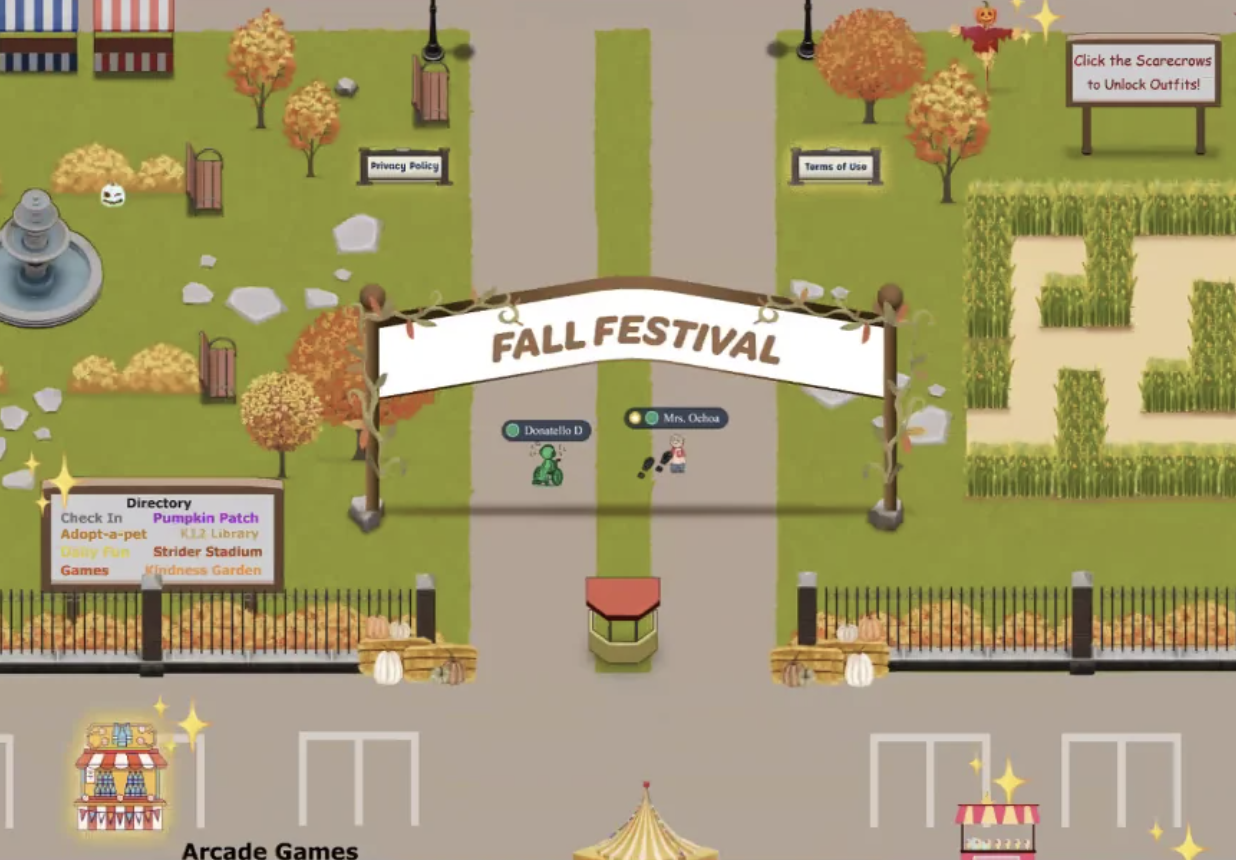
From a virtual soccer game to a digital pumpkin patch, K12 Zone gives students a way to take part in school traditions. For Hispanic Heritage Month, AZVA students could join friends on the dance floor, create an art mural and swap recipes, among other pastimes.
The school’s Fall Festival features a virtual corn maze and carnival games. Beyond seasonal events, students can participate in clubs like science or chess or visit a Zone built around Minecraft Education.
The number of students attending virtual schools in the United States doubled during the COVID-19 pandemic, according to Chalkbeat’s reporting on federal data. Enrollment fell slightly before rising again in 2024. About 3% of Arizona students attended fully virtual schools during the 2024-25 school year.
This school year, 825 AZVA and ISAZ students are from Pinal County.
At home, parents and guardians are learning coaches. They help students navigate coursework that includes workbook exercises and written assignments.
Although AZVA and ISAZ students occasionally meet local classmates at in-person events, like family fun days and movie nights, most of their interactions take place online.
Seventh grader Deshawn Davis switched from a traditional school to online learning three years ago. He said the virtual format works better for the way he learns, and he hopes to keep studying online until at least high school. His brother, fifth grader Donatello Davis, has attended school online since kindergarten.
Both said they have found it easy to make friends in the K12 Zone.
Abbie Ochoa, an AZVA interventionist who provides specialized student support, has taught online for five years. Based in Casa Grande, she works with students across the state. Before teaching online, she spent more than 20 years in brick-and-mortar schools.
The change has been “nice,” she said. While some teachers resisted online instruction during the pandemic, Ochoa said she embraced it.
Teaching online lets her meet with students more often and give individualized help without having to manage a whole classroom at the same time, she said.
When K12 Zone was introduced, however, she was initially reluctant to learn another platform. “I (didn’t) want to learn one more thing,” Ochoa said.
“(Then) I took my class in there one day as a little reward … and I was like, wow, this is actually really fun,” she said. “There’s so much here to do, and the kids were interacting, and it became a good incentive for students … (to get) work done.”
Much like recess at a traditional school, K12 Zone gives students a chance to talk and play with classmates outside lessons. A moderator is always present.
While in interactive mode, students can turn on their cameras and microphones, and they can follow friends as they move around the K12 Zone. Moderators can pause activity across the Zone to make announcements. Last week, Ochoa said she oversaw 60 students as they explored a Hispanic Heritage Month event.
Teachers can customize their own K12 Zones for fun or classroom instruction, creating spaces where students can interact with others or learn on their own.
Ochoa’s space includes multiple study areas: tables where students can practice reading and math and a little room for reading books together, she said.
Donatello was excited to share his progress on a sign language challenge, while Deshawn showed off his virtual adopt-a-pet, a “teenage dragon.”
“We have an amazing developer in the background,” Ochoa said.